
LEAVES BIO
Find Freedom From Weed

Marijuana Withdrawal: Is that a real thing?
Many people believe that marijuana is very safe, and it’s common to hear that withdrawal symptoms are rare when quitting. But is it really true that marijuana is not addictive and doesn’t cause any withdrawal symptoms?
“Cannabis Withdrawal from a daily smoker of 10+ years… I’ve never experienced anything like this before”
“Pot withdrawal is pretty severe”
“The anger from withdrawal is terrible”
“Withdrawals causing serious mental anguish”
“Someone please help me, my withdrawals make me feel like I’m dying.”

When you search for ‘withdrawal’ in r/leaves, the Reddit community focused on quitting weed, you’ll encounter numerous discussions as above. With 351,000 members, this group has served as a platform for people to share their heart-wrenching experiences of quitting marijuana for nearly a decade.
Yet, outside the group, it’s still common to see people lining up at dispensaries, teenagers vaping in public, and professionals casually mentioning their use of medicinal marijuana, as if there’s no risk of facing withdrawal when quitting. As the saying goes: ‘I smoked weed every day for 30 years and then just walked away from it without any problems. It’s not addictive.’ Many people firmly believe this and refuse to acknowledge the existence of marijuana withdrawal. But is that really true?
Before we draw any conclusions, let’s explore what marijuana withdrawal actually is.
What is Marijuana Withdrawal?
Marijuana withdrawal (also called cannabis withdrawal) refers to the physical and mental symptoms that arise after stopping or reducing the intake of marijuana products. Symptoms typically begin 24–48 hours after cessation and generally peak between days 2 and 14, with some effects lasting up to 3 weeks or longer for heavy users. Common symptoms include:
- Anger, irritability, and aggression
- Feelings of nervousness and anxiety
- Restlessness
- Decreased appetite or weight loss
- Depression
- Insomnia
- Unsettling or vivid dreams
- Headaches, nausea, vomiting, sweating, and abdominal pain
- Tremors
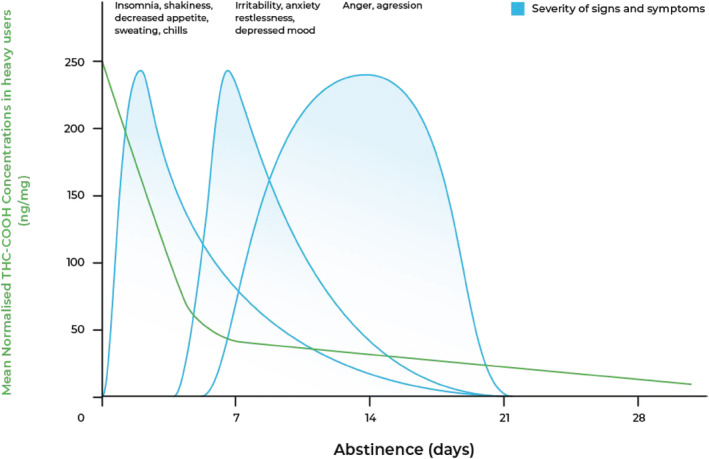
As illustrated in the figure above, withdrawal symptoms can persist for an extended period, with various mental and physical struggles peaking at different times. This creates a challenging battle, as individuals face wave after wave of intense discomfort while trying to quit.
What factors increase the likelihood of experiencing marijuana withdrawal?
- Frequency of Use: Daily or weekly marijuana use.
- Duration of Use: Prolonged use over an extended period.
- Age of Onset: Beginning marijuana use before the age of 18.
- Polysubstance Use: Concurrent use of other substances, such as tobacco or alcohol.
- Method of Use: Consumption methods like dabbing or vaping.
- Dosage: Using products with high concentrations of THC.
- Psychiatric History: A background of mental health issues, such as bipolar disorder, schizophrenia, depression, or anxiety.
- Trauma: Experiences of abuse, neglect, loss of a parent during childhood, as well as trauma at any age, including physical attacks, sexual assault, or bullying.
- Genetics factors: Genetic predispositions may affect how individuals develop cannabis use disorder.
- Relapse: Previous unsuccessful attempts to quit can lead to increased withdrawal symptoms in the future.
Why aren’t some people experiencing marijuana withdrawal?
1. Past Experiences
Their views are shaped by previous experiences, often stemming from an older generation that used marijuana products with much lower potency. Cannabis potency has significantly increased worldwide in recent years. In other words, a hippie grandpa who claims to have smoked joints daily (with 0.93% THC) without any issues may find himself easily overwhelmed by a modern joint containing over 16% THC.
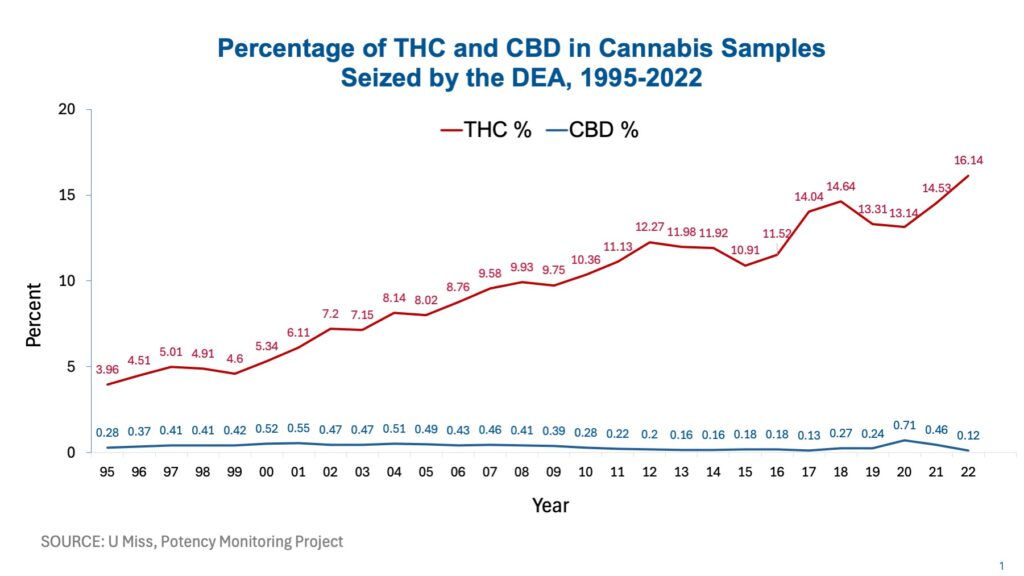
(Delta-9-tetrahydrocannabinol (THC) and Cannabidiol (CBD) Potency of Cannabis Samples Seized by the Drug Enforcement Administration (DEA), Percent Averages from 1995-2022, NIH Cannabis Potency Data)
2. Industry Promotion
The marijuana industry promotes its products as safe and upscale, presenting cannabis as a high-end alternative to alcohol and tobacco. Dispensaries use “budtenders” and luxurious decor to create an inviting atmosphere, resembling wine tasting with a variety of flavors and brands. They market cannabis as natural and harmless, often dismissing concerns about its risks. Warnings are rarely on packaging, which resembles gourmet candy or premium tea. As a result, many people may view spending over $100 a week on cannabis as normal, framing it as self-care. This perspective obscures discussions about cannabis withdrawal, pushing the issue into the background.
3. Unawareness of Withdrawal
Many individuals may not recognize that they are experiencing withdrawal symptoms. Initially, they might use marijuana to manage anxiety, but when they reduce their intake, their anxiety often increases. This leads them to either continue using or increase their dosage. Consequently, many people using medical marijuana to “treat” their symptoms are actually caught in a cycle of self-treating their marijuana withdrawal.
4. Occasional Use
They only used marijuana occasionally and stopped before developing a dependency. Like other drugs, marijuana mimics the brain’s endocannabinoid neurotransmitters in the reward system. Repeated use can alter how certain areas of the brain function and communicate. However, if someone has only smoked weed once and claims not to have experienced withdrawal, it’s likely because no structural changes have occurred due to their low dose and brief exposure.

5. Individual Differences
Variations in genes and other brain-based characteristics are linked to the severity of marijuana withdrawal. Just as some individuals have a higher tolerance for physical pain, others may have a greater tolerance for withdrawal symptoms, leading them to claim they haven’t experienced any withdrawal at all.
6. Never Tried to Quit
The recent legalization of marijuana in many states has led to an influx of new users. As many of them have not yet attempted to quit or reduce their usage, they have not experienced withdrawal symptoms up to this point.
7. Shame
Many people hesitate to discuss their marijuana withdrawal because they feel embarrassed. Cannabis is often seen as a soft, recreational, or medicinal drug, and admitting to withdrawal feels “lame” since it’s perceived as not particularly dangerous. As a result, individuals may avoid sharing their experiences with withdrawal.

Summary
Marijuana withdrawal is a significant and often overlooked issue, with studies indicating that 47% of regular marijuana users experience withdrawal symptoms. Factors such as the frequency and duration of use, age at which use begins, concurrent substance use, and genetic predispositions can all heighten the risk of withdrawal. Furthermore, the normalization of marijuana in society, along with its marketing as a safe and upscale product, contributes to a lack of awareness and dialogue about withdrawal.
Understanding marijuana withdrawal is essential for encouraging open conversations and providing support to those seeking to quit. At Leaves Bio, we recognize that the journey to overcoming marijuana addiction is deeply personal and can be especially challenging for some individuals. Our mission is to offer support, information, and resources to those ready to make a change and regain control of their lives.
Feel free to share this article with anyone who might find it helpful.
Remember, you are loved and you are not alone!
Reference
- Connor JP, Stjepanović D, Budney AJ, Le Foll B, Hall WD. Clinical management of cannabis withdrawal. Addiction. 2022 Jul;117(7):2075-2095. doi: 10.1111/add.15743. Epub 2022 Jan 10. PMID: 34791767; PMCID: PMC9110555.
- Peter Grinspoon, If cannabis becomes a problem: How to manage withdrawal. Harvard Health Publishing 26May2020
- Marijuana Withdrawal Symptoms, Timeline, and Treatment
Sign up to our newsletter
Stay up to date with Leaves Bio and Cannabis Use Disorder Research!
Sign up to our email newsletter to receive news on treatment options, research, meetings and events!